
Demystifying ONDC: How Open Networks are Leveling the Playing Field for Small Sellers
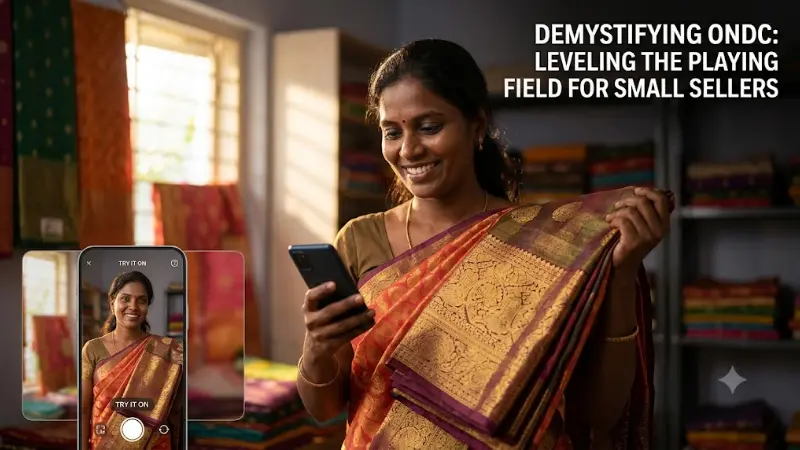
In the dynamic landscape of Indian digital trade, a revolutionary concept is taking hold – the Open Network for Digital Commerce (ONDC). This government-backed initiative is more than just a platform; it's a fundamental shift in how e-commerce operates, particularly designed to empower small and micro-sellers across the country. But for many small business owners navigating the complexities of online commerce, ONDC remains something of a mystery. This blog post aims to deconstruct ONDC, explain how it creates a more equitable environment for small sellers, and explore how it ties into crucial aspects of compliance, scaling, and forward-looking tools like Easyfit AI's virtual trial rooms.
Understanding ONDC: Breaking Down the Walls
At its core, ONDC is not an app or a marketplace itself. Instead, it's an open, interoperable network that enables buyers and sellers to discover and transact with each other across different platforms, regardless of which app they might be using. Imagine an Indian seller having a small, charming boutique in Madurai – let's call it "Bharati Weaves" – specializing in authentic South Indian silks. Before ONDC, "Bharati Weaves" might have needed to list their products separately on Amazon, Flipkart, Myntra, and several other platforms, each with its own set of rules, fees, and logistics requirements. Managing this across multiple silos is a significant challenge for small teams.
ONDC changes this by allowing "Bharati Weaves" to list their products on any ONDC-compliant platform (a Seller App). Once listed, their exquisite silk sarees become visible to buyers using any other ONDC-compliant Buyer App (like Paytm, PhonePe, or even a local grocery app). This interoperability breaks down the proprietary walled gardens of massive e-commerce players, fundamentally shifting the power dynamics and lowering the barriers to entry for smaller players.
Leveling the Playing Field: Visibility for All
One of the most significant advantages ONDC offers is democratization. Large e-commerce platforms often give prominence to big brands or sellers with large marketing budgets, effectively hiding small sellers. ONDC disrupts this model by focusing on discovery based on relevance and proximity rather than deep pockets.
When a customer in Chennai searches for "traditional silk saree" on their ONDC buyer app, "Bharati Weaves" from Madurai can appear alongside products from pan-India conglomerates. If the algorithm prioritizes proximity, smaller, local sellers might even get top billing for nearby customers. This equal opportunity to be discovered is a game-changer. Small sellers who could previously never compete on visibility now have a chance to showcase their products to a vast audience, driving sales and expanding their customer base without massive ad spend.
Business Compliance and Scaling: Navigating with Ease
For many small business owners, the administrative burden of running an online store can be overwhelming. Ensuring compliance with various GST regulations, managing logistics, and handling data privacy can feel like a full-time job in itself. ONDC aims to simplify some of these aspects by standardizing processes and encouraging the use of interoperable service providers.
- Simplified Onboarding: While individual platforms might have complex verification processes, ONDC-compliant seller apps aim for a smoother, more standardized onboarding experience, making it easier for traditional brick-and-mortar stores to take their first digital steps.
- Access to Logistics: Instead of managing separate logistics for each platform, small sellers on ONDC can access a wider pool of delivery services through the open network. This means they can choose logistics partners that best fit their needs and budget, ensuring timely deliveries and better customer satisfaction without being tied to a single platform's potentially expensive options.
- Scaling Potential: As small sellers start seeing success on the ONDC network, scaling becomes much more manageable. The simplified operations and access to a broader market provide a solid foundation for growth. They can gradually increase their product catalog, expand their reach, and invest back into their business.
Enhancing the Customer Experience: The Role of AI and Virtual Try-Ons
While ONDC handles the discovery and connectivity, small sellers still need to convince customers to buy. In the visual-driven world of e-commerce, professional product presentation is non-negotiable. This is where forward-thinking technologies like Easyfit AI's virtual trial rooms become crucial.
For small clothing brands – like our hypothetical "Bharati Weaves" – generating high-quality model images for every single product can be cost-prohibitive. Photoshoots require models, photographers, studio space, and time – resources a small business might not have in abundance. Easyfit AI solves this bottleneck perfectly. By allowing sellers to upload a photo of a garment and a person's photo, the AI generates a realistic image of that person wearing the garment.
This virtual try-on technology enhances the shopping experience dramatically, especially for products like sarees, kurtis, and other traditional Indian wear where fit, drape, and visual appeal are paramount. It builds trust, reduces uncertainty about how an outfit will look in real life, and can significantly increase conversion rates. Integrating such a customer-centric feature onto their independent online storefront or within an ONDC-compliant platform can give small sellers a significant edge.
Conclusion: Embracing the Future
ONDC is not just a trend; it's a structural change that is likely to define the future of Indian e-commerce. For small and micro-sellers, it offers an unprecedented opportunity to move beyond local boundaries, compete on a broader stage, and build sustainable online businesses. While the network is still evolving, the potential for democratization, simplified compliance, and efficient scaling is immense. By combining the connectivity of ONDC with the power of modern e-commerce tools like professional AI-powered product visualization, small Indian sellers are not just leveling the playing field – they are poised to become key players in the nation's digital trade revolution.
Ready to take action?
Start implementing the exact methods outlined in this guide.
Try AI Trial Room Now (₹599/Mo)