
GST E-Invoicing for Textile Sellers: Automating Compliance Through Your Storefront Compliance & Scaling
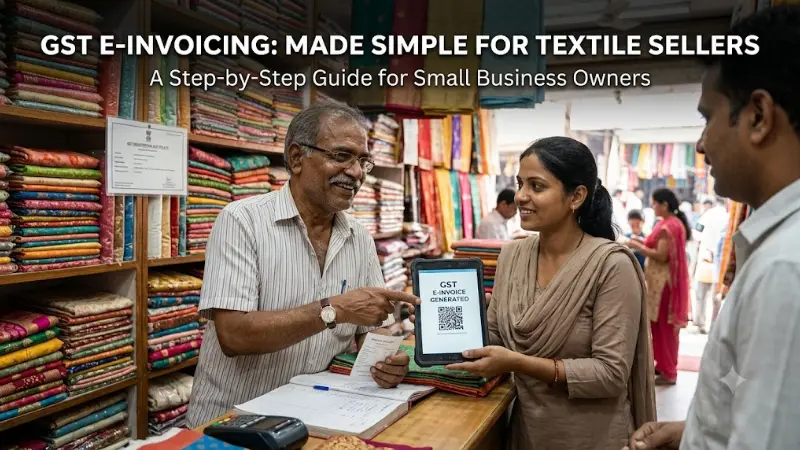
GST E-Invoicing for Textile Sellers: Automating Compliance Through Your Storefront Compliance & Scaling
The Indian textile and apparel industry is undergoing a massive digital evolution. From traditional boutiques in Surat, Jaipur, and Tirupur to booming direct-to-consumer (D2C) online brands, selling sarees, kurtis, gowns, and ethnic wear online has never offered greater revenue potential.
However, with rapid scale comes regulatory oversight. The Government of India’s push for GST E-Invoicing under the Invoice Registration Portal (IRP) requires businesses meeting specific turnover thresholds to issue standardized digital invoices with a unique Invoice Reference Number (IRN) and QR code. For online textile sellers managing hundreds of daily orders across custom storefronts, manual e-invoice generation leads to shipment delays, tax filing mismatches, and heavy non-compliance penalties.
In this guide, we explore how automating GST e-invoicing directly within your online storefront eliminates manual tax errors, streamlines fulfillment, and empowers your clothing business to scale seamlessly.
1. The Challenges of GST Compliance in Indian Textile E-Commerce
Selling textiles online presents distinct tax accounting challenges compared to other retail categories:
- Variable GST Rates: Textile products carry split GST brackets based on transaction value and product type (e.g., fabrics, ready-made garments, intricate ethnic wear).
- High Order Volumes & Returns: Indian fashion retail faces return rates averaging 20–30%. Issuing credit notes and revising tax invoices manually for returned orders is time-consuming and error-prone.
- B2B vs. B2C Invoicing: Multi-tenant textile sellers frequently supply wholesale buyers (B2B) alongside retail customers (B2C), requiring strict adherence to distinct invoicing guidelines and B2B e-invoicing mandating IRN generation.
- Dispatch Bottlenecks: Courier services and shipping aggregators (like Shiprocket) require valid invoice and tax documents before dispatches can be scheduled.
2. Key Requirements of GST E-Invoicing
To maintain compliance while processing online apparel orders, your store’s invoicing pipeline must automatically capture and compute:
- Mandatory Fields: GSTIN of supplier and buyer, HSN code (4-digit or 6-digit depending on turnover), place of supply, tax rate breakup (CGST, SGST, IGST), and taxable values.
- IRN & Signed QR Code: Generation of a 64-character hash code (IRN) from the GST system alongside a digitally signed QR code embedded directly into customer PDF receipts.
- Real-time Tax Calculation: Automatic calculation based on customer state versus store origin state during online checkout (Razorpay / PhonePe integration).
3. How Storefront Automation Simplifies Compliance
Instead of manually transferring order data to standalone accounting tools at the end of every business day, modern e-commerce architectures integrate invoicing directly into the order lifecycle.
Ready to take action?
Start implementing the exact methods outlined in this guide.
Automate Storefront & Compliance — Start Easyfit AI for ₹599/Month