
Tirupur Makes the World's Clothes — So Why Doesn't the World Know Tirupur's Brands?
Introduction: The Silent Engine of Global Fashion
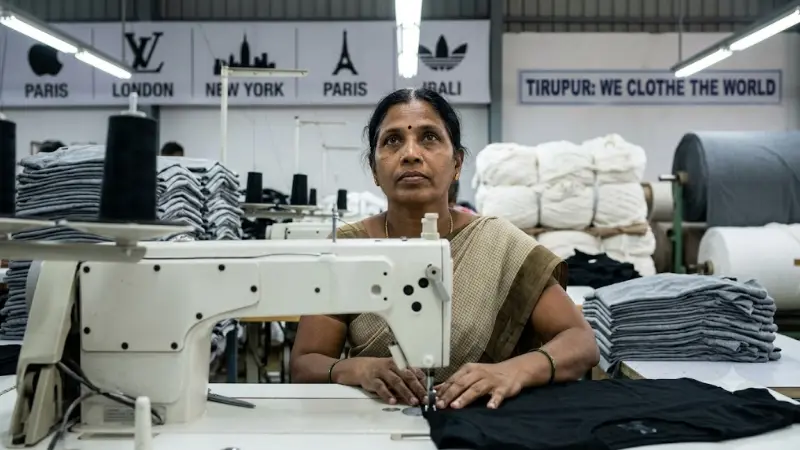
Tirupur, a bustling city in Tamil Nadu, India, is often hailed as the "Knitwear Capital of India." If you own a branded t-shirt, polo, or sweatshirt, there's a significant chance it was stitched, dyed, and finished in one of Tirupur's thousands of factories. This industrial cluster generates billions of dollars in export revenue annually, supplying garment giants like Nike, Adidas, H&M, and GAP.
Yet, despite this monumental manufacturing prowess, if you ask a consumer in New York, London, or even Mumbai to name a globally recognized fashion brand originating from Tirupur, you’ll likely be met with silence. Tirupur is the invisible backbone, the tireless engine, but rarely the face of fashion.
This begs a crucial question: Why hasn’t the world's clothing factory been able to build its own household names?
The Dominance of Contract Manufacturing (CM)
For decades, Tirupur's economic model has been laser-focused on contract manufacturing. Factories here excel at operational efficiency, cost-effectiveness, and meeting stringent quality standards set by international buyers. The business logic is straightforward: receive design specifications, source raw materials (often cotton from the surrounding region), manufacture at scale, and export.
This model offers stability and consistent volume, but it fundamentally differs from building a brand. Success in CM is measured by efficiency, reliability, and cost-per-unit. Success in branding is measured by perception, marketing storytelling, and customer loyalty.
The Missing Pieces: Design, Marketing, and Distribution
Building a global brand requires a completely different skillset and investment profile than running a world-class factory. Here are the missing links:
- Design & Trend Forecasting: Tirupur factories typically execute designs provided to them. Developing in-house design teams that can anticipate global fashion trends, rather than just react to orders, is a significant shift.
- Marketing & Brand Storytelling: This is perhaps the steepest hurdle. Global brands invest billions in creating an emotional connection with consumers. Tirupur's expertise lies in B2B relationships (business-to-business), not the sophisticated B2C (business-to-consumer) marketing needed on the world stage.
- Distribution Networks: Getting products onto shelves (physical or digital) globally requires massive logistics, retail partnerships, and e-commerce infrastructure that contract manufacturers rarely possess.
The "White Label" Trap and Margin Squeeze
By remaining white-label suppliers, Tirupur manufacturers capture only a fraction of the final retail price. The lion's share of the profit margin goes to the brand owners, who command a premium for their logo and marketing. While Tirupur focuses on minimizing production costs by pennies, the brands they supply are selling the final product for substantial markups. This margin squeeze makes it difficult for individual factories to generate the surplus capital required for long-term brand building.
The Winds of Change: Can Tirupur Pivot?
The tide is slowly beginning to turn. A new generation of entrepreneurs in Tirupur, often educated abroad, is recognizing this branding gap. They are experimenting with several strategies:
- Domestic Brands: Several manufacturers are launching successful domestic brands focused on the rapidly growing Indian middle-class market. This allows them to build B2C expertise closer to home.
- E-commerce & D2C (Direct-to-Consumer): The rise of global e-commerce platforms provides a direct channel to international consumers, bypassing traditional retail gatekeepers. D2C allows for smaller-scale market testing.
- Sustainable & Niche Focus: By specializing in sustainable fabrics or niche categories (like high-performance activewear), Tirupur firms can carve out a unique selling proposition that forms the foundation of a brand identity.
Conclusion: From Factory Floor to Fashion Forward
Tirupur’s story is one of incredible industrial achievement. It has proven its ability to clothe the world. The challenge now is to convince the world to wear its identity. Moving from a trusted supplier to a recognized creator requires a fundamental strategic shift, significant investment in non-manufacturing capabilities, and plenty of patience. The potential, however—to capture a greater share of the global fashion value chain and define India's style on the world stage—is immense.
The infrastructure is in place. The expertise is unmatched. The only thing missing is the brand name on the label.
Ready to take action?
Start implementing the exact methods outlined in this guide.
Start Your 7-Day Free Trial of Easyfit AI for 599₹/month