
Tirupur's Next Chapter: From Export Hub to Global Online Brands
For decades, the city of Tirupur in Tamil Nadu has been known as the "Knitwear Capital of India." If you are wearing a t-shirt from a major global brand, there is a very high probability it was stitched, dyed, and finished in one of Tirupur’s thousands of manufacturing units.
Tirupur built its reputation on unparalleled manufacturing efficiency, competitive pricing, and high-quality cotton knitwear. It became the backend engine for high-street brands across Europe and North America.
However, the tide is turning. Tirupur is no longer content just being the factory to the world. A new generation of entrepreneurs is rewriting the playbook, transitioning from 'Made in Tirupur' to 'Branded in Tirupur.'
The Shifting Paradigm: From B2B to D2C
The traditional business model in Tirupur involved massive business-to-business (B2B) orders with slim margins, heavily reliant on the economic health of Western markets. While lucractive, this model kept local manufacturers hidden behind the labels of global giants.
Several factors are fueling the shift toward creating indigenous Direct-to-Consumer (D2C) brands:
- Digital Penetration: The explosion of internet usage and e-commerce infrastructure in India has made it possible to reach customers directly, bypassing traditional retail gatekeepers.
- Margin Capture: By owning the brand and selling directly to the consumer, manufacturers can capture the massive retail margins that previously went to international middlemen and brand owners.
- Data-Driven Design: Instead of waiting for tech packs from foreign buyers, local manufacturers are using data to understand domestic and international trends in real-time, allowing for faster product iterations.
The Challenges of Branding
Moving from a manufacturing mindset to a branding mindset is not easy. It requires a completely different skillset:
- Marketing and Storytelling: Knowing how to make a shirt is different from knowing how to sell a lifestyle or an identity.
- Logistics and Warehousing: Managing B2B shipments in containers is vastly different from shipping individual packages to thousands of unique customers.
- Technology Adoption: Successful D2C brands rely heavily on technology for inventory management, customer acquisition, and, crucialy, fit accuracy.
Technology as the Enabler: Solving the Returns Problem
Perhaps the biggest hurdle for new online apparel brands is "fit uncertainty," which leads to high return rates. Returns eat into profits and damage brand reputation.
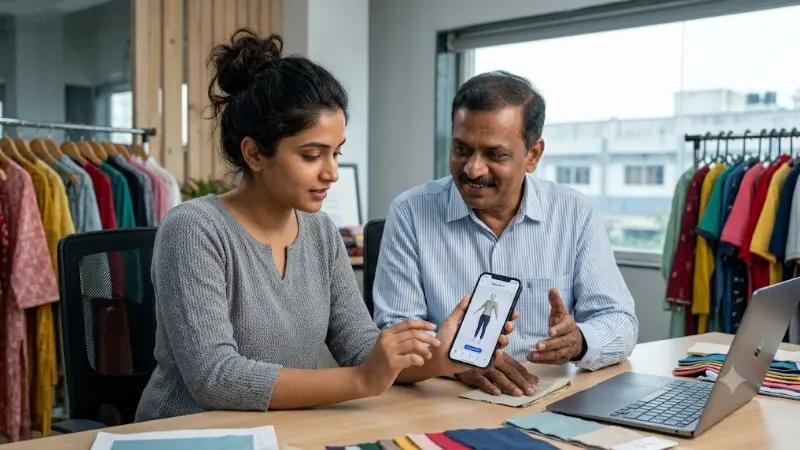
This is where the new era of Tirupur entrepreneurs is turning to technology. By integrating AI-powered size recommendation tools on their e-commerce stores, they can give customers the confidence to buy, significantly reducing return rates and increasing customer loyalty.
Conclusion
Tirupur’s next chapter is incredibly promising. The existing manufacturing prowess provides a solid foundation that most startup brands lack. By combining this manufacturing strength with digital marketing, robust logistics, and cutting-edge technology like AI-fit assistants, Tirupur is poised to evolve from a silent supplier to a loud, recognized force in the global online fashion industry.
Ready to take action?
Start implementing the exact methods outlined in this guide.
Boost Your Tirupur D2C Brand with Easyfit AI – Start for ₹599/month